Why This "Messy Bun" Design Works for Your Next Project
The Immediate Mood: Friendly and Lighthearted
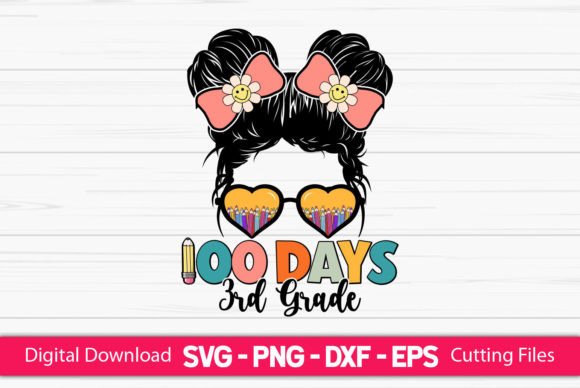
Opening the file for 100 Days 3rd Grade Girls Messy Bun, the first impression is one of cheerful simplicity. The design isn't overly complex or trying too hard; it feels like a candid snapshot of a kid's school day. That's a huge asset. For embroidery, especially on items meant for a child or a proud parent, this lighthearted, friendly mood translates directly into stitchable charm. The theme is clear and universally understood—celebrating a milestone—but the "messy bun" element adds a touch of personalized, relatable personality. It says "achievement" without being stiff, which is perfect for the handmade market.
A Natural Fit for Custom Apparel and Keepsake Items
In my work, a design like this immediately suggests a few concrete project paths. Picture a custom sweatshirt for a third-grader. The scale and layout of 100 Days 3rd Grade Girls Messy Bun would center nicely on a youth-sized garment, creating a focal point without overwhelming the fabric. Similarly, a tote bag for a teacher or a parent becomes a functional keepsake with this embroidered on the front. The design inherently leans toward personalized gifts and celebratory items—think pillow covers for a child's room, aprons for a baking celebration, or even a simple patch that can be applied to a backpack or blanket. Its visual personality is sweet and specific, making it a strong candidate for boutique baby items or nursery decor, if adapted with thoughtful color choices.
Performance on Real Fabrics: Where Clarity Matters
When evaluating an embroidery file for real use, I think through the stitch journey. The relatively clean lines and distinct elements in this design suggest it should embroider with good clarity on stable fabrics like cotton twill (for totes), fleece (for sweatshirts), or mid-weight linen. However, this is where practical judgment comes in. On thin or stretchy fabrics—a fine t-shirt, for instance—the stitch density needs to be appropriate to prevent puckering, especially in any fill areas the design might contain. The same goes for textured fabrics like some towel weaves; fine details, particularly in the smaller lettering of "3rd Grade" and "Days," could lose definition if not paired with the right stabilizer and hoop technique.
Dark fabric backgrounds require a strategic approach. While the provided file formats likely allow for easy color changes in your software, the design's success on a black or navy hoodie hinges on thread color contrast. Testing on scrap fabric first is non-negotiable here. You need to see how the "messy bun" silhouette and the text interact when rendered in stitches against a dark ground. Similarly, curved surfaces like caps present a challenge for any design with horizontal text elements; the curvature can distort the layout, so a test run is essential to ensure the celebratory message remains legible and visually balanced.
Boosting Product Value Through Thoughtful Execution
A well-embroidered version of 100 Days 3rd Grade Girls Messy Bun does more than just decorate a item. It elevates the perceived value. For a small business owner or Etsy seller, a clean, crisp stitch-out on a high-quality tea towel or baby bib turns a digital file into a tangible, premium handmade product. This builds customer trust and reinforces your brand's attention to detail. The design's inherent giftability—it's made for a specific, emotional occasion—means a finished embroidered piece has a built-in story, which engages buyers looking for a meaningful present. Your professional execution makes that story shine.
Designer Notes for a Successful Stitch-Out
Before you commit this design to a client's project or your shop merchandise, run through these practical checks. First, always test on a scrap of your intended fabric. This reveals everything: whether the stitch density is suitable, if any small details like the bun's lines or the "100" numerals become too dense or too sparse, and how the overall size feels in your chosen hoop size.
Second, play with thread color contrast. Create black and white mockups or simple digital previews to visualize the design on both light and dark backgrounds. This helps you plan your product line—maybe you offer it on both pastel and dark heather gray sweatshirts. Third, consider the end-use. For items that will need frequent washing, like a child's apparel or kitchen towels, evaluate the stability of the stitches. A design with very dense fills might be less durable over time on stretchy fabrics compared to one with more open running stitch or satin stitch outlines.
Finally, and crucially, confirm the licensing terms for this digital embroidery file. The product description mentions it's a digital file for cutting machines, but the specifics for embroidery use and commercial sale of finished products aren't detailed here. Before you sell any tote bags, caps, or baby items embroidered with this design, you must verify that your intended use—personal, client work, or commercial mass production—is permitted. This protects your craft business and ensures you're building your brand on solid ground.
Where It Finds Its Best Home
After considering all this, I see 100 Days 3rd Grade Girls Messy Bun thriving in specific niches. It's ideal for custom apparel celebrating the 100th day of school—the obvious use. But it also extends beautifully into the world of personalized gifts from grandparents, commemorative patches for school memorabilia, and even as a cheerful accent on holiday gifts for teachers. For apparel decorators and small shop owners, it's a seasonal, targeted asset that can fill a specific demand in your lineup. Its strength is its straightforward, emotive theme executed with a touch of everyday whimsy (that messy bun). By embroidering it carefully on suitable, stable fabrics, and presenting it as a well-made finished product, you turn a simple graphic into a cherished keepsake. That's the real goal of any embroidery project, and this design has the core ingredients to help you achieve it.