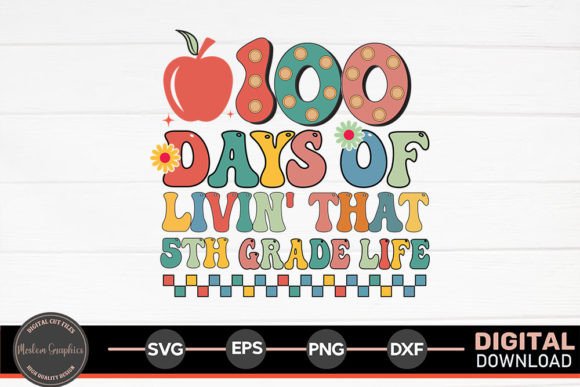
This Design Captures the Whimsy of Fifth Grade
A Design That Feels Playful, Not Juvenile
When I first opened 100 Days of Livin That 5th Grade Life, my immediate impression was one of clever nostalgia. This isn't a childish cartoon. It carries a playful, slightly mischievous mood that translates perfectly into embroidery. The layout suggests a celebratory banner or a retro school slogan, with a visual personality that’s confident and fun. It feels destined for projects where the recipient—or the buyer—has a sense of humor and a fondness for that specific, glorious age of independence. It’s a design that tells a story before you even stitch it.
The Real-World Embroidery Scenario: A Custom Tote for a Teacher
I pictured it immediately on a sturdy canvas tote bag. A teacher, perhaps celebrating their class's 100th day, or a parent gifting one as a thank-you. The scale of the design would allow it to be a central, bold statement on the bag’s front panel. The detail level, from what I can assess in the provided files, looks balanced. It shouldn’t be overly dense, which is a relief for a larger item like a tote where stitch count can become costly and time-consuming. It would stitch out cleanly, with good definition between elements, making it look professional and gift-ready.
Where This Design Finds Its Natural Home
Beyond that tote, 100 Days of Livin That 5th Grade Life has a wide range of potential homes. It would be a standout on the back of a crewneck sweatshirt for a school spirit event. As a smaller motif on the corner of a tea towel in a teacher's kitchen, it adds personality. For crafters selling in the baby and kids’ niche, it could be wonderfully sweet on a toddler’s denim jacket or as a centered design on a nursery pillow cover—a nod to future adventures. For small shop merchandise, this design has that ‘recognizable phrase’ appeal that sells well at craft fairs and in Etsy listings, especially as personalized gifts.
The inclusion of multiple file formats—EPS, SVG, PNG, DXF—is a significant practical advantage. It means I can easily scale it for different hoop sizes without quality loss, prepare printable mockups for my online shop using the PNG, and adapt it for various machines or software. This flexibility is crucial for commercial embroidery projects and for selling digital product previews.
Products That Will Benefit Most From This File
- Custom Apparel: Sweatshirts, t-shirts, and caps where the phrase adds value.
- Home Goods: Aprons, pillow covers, and kitchen towels for a themed kitchen or classroom.
- Personalized Gifts: Baby blankets, tote bags, and patches for milestone celebrations.
- Small Business Merchandise: Items for boutique branding around education or nostalgia.
Caution Zones: Where to Test Before You Stitch
While the design seems adaptable, there are always careful considerations. The lettering and any small decorative accents will be the critical areas. On highly textured fabrics like some sweaters, or on stretchy fabric without proper stabilizer, small details can get lost or distorted. Embroidering this on a curved surface like a cap requires careful placement so the slogan reads correctly.
If the design has very dense fill stitch areas, it might become stiff on thin fabrics like lightweight t-shirts. For dark fabric backgrounds, you’ll need to think strategically about thread color contrast to maintain clarity. And for products destined for frequent washing—like kids’ clothes or kitchen linens—you’d want to test the stitch density and reinforcement to ensure longevity. These are not flaws of the design itself, but simply the realistic factors any embroidery designer weighs.
Practical Designer Notes Before Hooping
- Always test on scrap fabric of the same type and color as your final project.
- Check thread color contrast against both light and dark backgrounds.
- Review the stitch density in your software; adjust if needed for your fabric.
- Confirm the hoop size required for your intended product scale.
- Inspect the small details in a black and white mockup to check for clarity.
- Use the proper stabilizer for your fabric—this is non-negotiable for clean results.
- Crucially: Check the licensing terms included with the files to confirm it’s suitable for both personal and commercial projects before selling finished items.
How This Embroidery File Elevates Your Final Product
Using a design like 100 Days of Livin That 5th Grade Life effectively isn’t just about stitching; it’s about the finished product’s appeal. A clean, well-executed embroidery of this phrase increases perceived value. It feels intentional and handmade, which builds customer trust. For a gift, it’s highly giftable because it’s specific and nostalgic. For your craft business, it contributes to brand consistency if you specialize in witty, celebratory designs.
It engages buyers because it sparks a memory or a smile. That recognition is a powerful sales tool. Professionally embroidered, it turns a simple garment or object into a keepsake. This is where the practical value of a good embroidery file truly shines: it allows you, the maker, to produce something that feels special and well-crafted.
A Final Thought Before Your Project Starts
100 Days of Livin That 5th Grade Life is a graphics product with strong potential in the crafts space. Its strength is its mood and its adaptable file set. My recommendation is to approach it with a clear product vision. Know what you want to make, test accordingly, and leverage its playful personality to create something that people will genuinely love to receive, wear, or display. It’s a design that, with careful execution, will stitch out as a confident, friendly, and memorable piece of embroidery.