Nacho Average Teacher: A Design Review
When a design like the FREE Nacho Average Teacher Svg lands on my desktop, I immediately stop thinking about the file itself and start imagining the finished product. That’s the mindset every professional crafter should adopt. This isn’t just a digital asset; it’s a blueprint for a physical, stitched creation that will live on fabric, be gifted, sold, or worn. So, let’s review it from that practical, hands-on perspective.
The First Impression: Playful & Professionally Casual
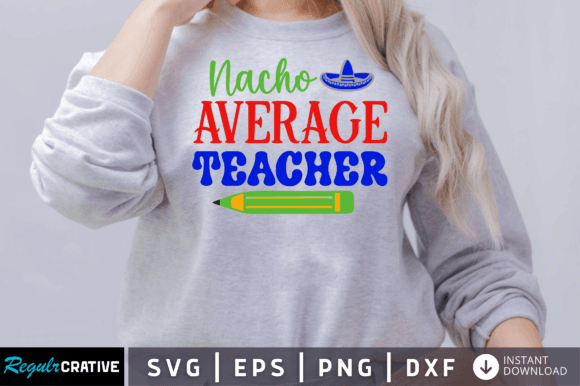
The phrase “Nacho Average Teacher” is, of course, the star. It lands with a friendly, pun-filled confidence that’s perfect for celebrating educators. Visually, the layout leans into a casual, graphic vibe that feels modern and approachable. This isn’t a formal, ornate script—it’s a design with a personality. That personality suggests it belongs on items meant for personalized gifts or small shop merchandise where a touch of humor and warmth is the goal.
Imagine this scenario: A client requests a custom embroidered tote bag for a teacher’s end-of-year gift. They want something unique, not a generic store-bought item. This design immediately fits. The mood is celebratory and appreciative, but also fun. It tells the recipient they’re special, without being overly sentimental. For a boutique owner or an Etsy seller, that’s a valuable emotional hook.
Where This Design Thrives in Embroidery
In real-life embroidery projects, this design’s strength is its versatility for celebratory surfaces. Think of it stitched onto:
- Custom apparel like sweatshirts, t-shirts, or polo shirts for school staff.
- Tote bags and backpacks—practical gifts that get daily use.
- Aprons for a teacher who loves classroom cooking projects.
- Pillow covers or tea towels for a cozy, homey gift.
- Baby items like a little onesie if the teacher is a new parent—a wonderfully personal touch.
- Embroidered patches that can be applied to anything, offering flexibility.
The description mentions use on mugs and signs, which points to its role in craft business items beyond apparel. For a digital embroidery file, this means it must translate clearly from screen to stitch. The clean, graphic nature suggests it will perform well on these items, provided the stitch density and hoop size are appropriate.
Considerations for Stitching Success
As an experienced designer, my excitement is always tempered by practical realities. Here’s where you need to think critically before hitting ‘start’ on your machine.
Navigating Small Details & Fabric Choices
The potential challenge with any design centered on text is the lettering. Words like “Nacho” and “Teacher” need stitching clarity. On small hoop sizes, or on textured fabrics like a dense sweatshirt fleece, small serifs or thin lines could lose definition. Always test the design on scrap fabric first. I’d run a sample on both a light and a dark fabric background to check thread color contrast. A bold, contrasting thread color is key here.
Be cautious with stretchy fabric or thin fabric without proper stabilizer. The design’s areas, depending on the final embroidery file configuration, could cause puckering if the density is high. Similarly, on curved surfaces like caps, the text layout must be evaluated for distortion. This design’s linear nature might require careful placement.
For products needing frequent washing—like baby clothes or kitchen towels—ensure your stitch choices (likely a solid satin stitch or fill stitch for the letters) are robust and secure to maintain that handmade presentation over time.
The Impact on Your Business & Your Customer
Using a design like this isn’t just a technical act; it’s a business and emotional decision. How does it affect your work?
For visual appeal, it delivers immediate recognition and a smile. That translates directly to customer trust and buyer engagement. A customer sees this on a handmade product and understands the thought behind it—it’s not random. This boosts the perceived product value.
Giftability is exceptionally high. It’s a design made for a specific, appreciative occasion. For a creative entrepreneur, that means your finished item—an embroidered pillow, a tote—sells itself as a perfect solution. It aids in brand consistency if your shop focuses on celebratory, personalized goods.
However, professionalism comes from your execution. A poorly stitched version of a great design hurts more than a simple design stitched perfectly. Your skill in translating this digital embroidery file into a clean, crisp physical piece is what turns a fun graphic into a premium finished product.
A Note on Commercial Use
The product is titled “FREE,” and the description states you “can be used for various purposes.” This is a crucial point. Before selling any finished product or incorporating it into your commercial embroidery offerings, you must confirm the licensing terms. Does “free” mean free for personal use only, or free for commercial use? Always verify this. It protects your craft business and maintains integrity.
Practical Designer Notes Before You Hoop
Here’s my condensed checklist, drawn from years of reviewing designs for real projects:
- Test, test, test. Run the machine embroidery design on your chosen fabric type with your standard settings.
- Inspect the tiny lettering and any detailed corners in your test piece. Are they crisp?
- Check the stitch density in your software preview. Very dense areas on light fabrics might require a lighter stabilizer; on dark fabrics, they might show through.
- Consider creating black and white mockups or printable mockups to visualize placement on your final product—a tote bag, an apron.
- Plan your thread colors. A high-contrast palette (e.g., bright thread on dark fabric) will maximize impact for this playful phrase.
- Finally, step back and imagine it stitched. Does the FREE Nacho Average Teacher Svg feel right for your specific embroidery project—a holiday gift, a boutique product, a client’s custom apparel? If the answer is yes, and your technical checks are clear, you have a design that will not only stitch well but connect well. That’s the ultimate goal for any maker.