I'm the Favorite Teacher Design: A Designer's Review
Every embroidery designer knows that some designs are just for fun, while others are destined for the project queue. When a design like "I'm the Favorite Teacher Svg Design" lands on my screen, I look at it through the lens of real-world application. How will it stitch out? What will it feel like on fabric? What kind of customer or client would be drawn to it? Let's walk through that evaluation.
The First Impression: A Balanced, Friendly Statement
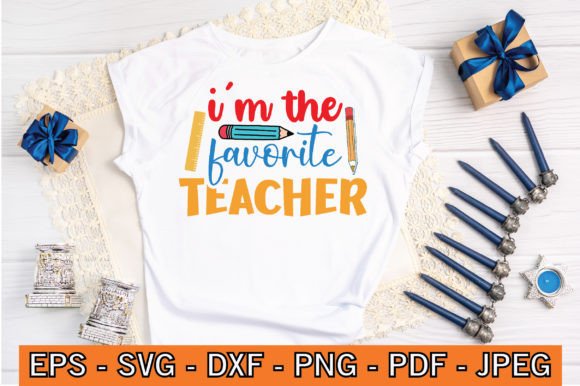
This design makes a clear and confident declaration. The centered layout and the simple, rounded font create an approachable and friendly mood. It’s not overly ornate or stern—it feels like a warm, personal badge of honor. As a graphics file intended for crafts, its strength lies in its straightforwardness. It doesn’t try to do too much, which means it has a high potential for stitching clarity and visual impact on a finished product. It’s a design that speaks to identity, pride, and a touch of humor, all wrapped up in a clean visual package.
Where This Design Thrives in Embroidery Projects
In my experience, a design with this personality fits perfectly into the world of personalized gifts and boutique merchandise. Imagine a client requesting a custom embroidered tote bag for a beloved educator. This design would be a prime candidate. The text is large enough to be readable from a distance, making it ideal for tote bags, sweatshirts, or apron fronts. For small business owners or Etsy sellers creating teacher appreciation gifts, holiday presents, or even boutique baby items like a personalized blanket for a teacher's new child, this design adds a layer of sentimental value.
It’s also a strong contender for quick-turn, high-impact projects. An embroidered patch with this message could be applied to a cap or a backpack. On a pillow cover or a kitchen towel, it becomes a decorative and functional statement in a home. The design's simplicity means it can adapt to various scales—from a larger statement on a sweatshirt to a more modest application on a baby onesie or a tea towel. For apparel decorators, it’s a ready-made asset for a niche but appreciative market.
The Practicalities of Stitching It Out
Turning a digital embroidery file into a physical stitched product always requires some forethought. With a design centered on text, the key considerations are stitch density and lettering clarity. Satin stitches for the main lettering would give it a polished, raised texture, while a simpler running stitch might suit a more rustic look on a tea towel or pillow. The open, rounded letters should translate well into stitches without tiny, troublesome corners that can bunch up.
However, this is where a designer’s practical habits come in. Always test the design on scrap fabric first. Use a fabric similar to your final product—whether it’s a cotton tote, a fleece sweatshirt, or a textured apron. Check the thread color contrast against both light and dark backgrounds. A classic white or bright color on a dark garment can be stunning, but it demands good stabilizer to prevent puckering. On thinner or stretchy fabrics, you'll need to be mindful of the overall stitch density to maintain fabric integrity.
Considerations for Specific Applications
Not every project is a perfect fit. For curved surfaces like caps, the design's horizontal layout might require careful positioning to look balanced. On very small hoop sizes, the lettering could become cramped, losing its friendly, open feel. If you're considering it for items that will undergo frequent washing, like baby clothes or kitchen linens, a denser fill stitch might hold up better over time than a delicate satin stitch outline.
The design also invites you to think about value addition. For a craft business, an embroidered sweatshirt with this clean, professional design feels more like a finished, giftable product than a homemade experiment. It builds customer trust through its clear execution. For a digital product seller using it in printable mockups, it provides a strong, recognizable graphic that buyers can easily visualize on their own projects.
A Real-Life Scenario: Preparing a Holiday Gift Bundle
Let’s say I’m preparing a small batch of teacher appreciation gifts for a local boutique. I’m thinking of an embroidered linen tea towel paired with a matching oven mitt. This "I'm the Favorite Teacher" design is on my shortlist. I’d stitch it on a natural-colored linen with a rich, navy blue thread. The practical questions arise: Will the design hold its clarity on the textured linen? Does the size allow it to be a focal point without overwhelming the smaller mitt? A quick test on a scrap of linen confirms it works beautifully, and the resulting product feels cohesive, handmade, and thoughtfully professional. It’s exactly the kind of item that engages a buyer looking for a meaningful gift.
Final Designer Notes Before You Stitch
Your process matters. After downloading, inspect the small details in your software. How are the corners of the letters defined? Could they benefit from a slight adjustment for stitch smoothness? Compare how it looks in black and white mockups to gauge its impact on different fabric colors. Crucially, confirm the licensing terms for this digital embroidery file. The product description notes it's an instant download for use with various programs, but before selling finished items or commercial embroidery projects, you must verify your rights to do so. This is a non-negotiable step for any professional or small business owner.
In essence, "I'm the Favorite Teacher Svg Design" is a versatile, mood-positive graphic that translates well into the tactile world of embroidery. It supports craft businesses, enhances personalized gifts, and delivers a clean visual statement. With practical testing and mindful application regarding fabric, scale, and licensing, it can become a reliable and appealing asset in your embroidery project repertoire, from a single heartfelt gift to a line of small shop merchandise.