A Design Review: Teachers Give Us the Key
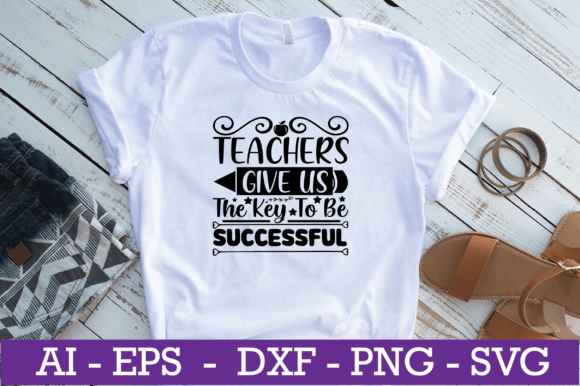
Whenever I’m considering a new design for embroidery work, my first question is always about its real-life application. How will it stitch out? What kind of fabric will it look best on? And crucially, what will a customer feel when they see it on a finished product? Today, I’m looking at Teachers Give Us the Key to SVG Design from that exact practical perspective.
The First Impression: Sentimental & Structured
The moment I opened the Teachers Give Us the Key file, its mood was immediately clear. This isn't a whimsical, cartoonish illustration. It has a structured, almost emblem-like quality. The central key motif, paired with the typography, creates a sense of gratitude and respect. It feels classic and sincere, which is precisely the tone you want for projects honoring educators. The layout is balanced, with clear spaces between elements, which is a huge positive for embroidery. It tells me the design won’t become a muddy blob of stitches; each part has room to breathe and be recognized.
This visual personality naturally belongs to projects meant as keepsakes or meaningful gifts. I envisioned it instantly on a tote bag for a retiring teacher—something durable and used daily, carrying a message of appreciation. It also struck me as perfect for a framed, embroidered patch or a decorative pillow cover in a classroom-themed nursery. The design carries weight, so it needs a product that matches that sentiment.
Performance Across Real Embroidery Projects
Let’s walk through some scenarios. For custom apparel like sweatshirts or polo shirts, the design’s moderate detail level is promising. On a mid-weight sweatshirt, the key and text should stitch with good clarity, especially if you choose a slightly larger hoop size to preserve the integrity of the lettering. I’d lean towards a 5x7 hoop or larger for the best result.
For tote bags and aprons, which often use heavier canvas or cotton, Teachers Give Us the Key would perform beautifully. These fabrics handle stitch density well, and the design’s structured look enhances the product’s handmade, professional presentation. As an Etsy seller or at a craft fair, an embroidered tote with this design becomes a high-value item, not just a quick craft. It tells a story.
Thinking of baby clothes or blankets as a gift for a teacher who’s just had a baby? Here, you need to be careful. The design might be too dense for very thin, stretchy knits. I’d strongly recommend adapting it—perhaps using just the key element as an applique design on a baby sweater, simplifying it for that delicate fabric. For a blanket, using a lighter fill stitch for the key interior would prevent a stiff, uncomfortable patch.
For embroidered patches or caps, the shape works. The key has a defined outline that would translate well into a satin stitch border. However, on a curved cap surface, the text could be tricky. Small lettering on a curved area can distort. This is a case where testing on scrap fabric, or even a dummy cap, is essential. The potential is there for a fantastic, personalized gift, but execution needs precision.
Where This Design Demands Careful Use
Every design has its limitations, and a professional reviewer has to point them out. For Teachers Give Us the Key, the primary caution areas involve scale and fabric.
Attempting this in a very small hoop size will compromise it. The text, likely using a running stitch or a delicate satin stitch, needs space. Crushing it into a 3x4 hoop will make the lettering unreadable and the key details lost. Always confirm your minimum workable hoop size with a test.
Dark fabric is another consideration. The design, as conceived, likely uses positive space—the key and letters are the embroidered elements. On a dark background, you need excellent thread color contrast. A bright, metallic gold or a crisp white would be stunning, but a poorly chosen medium-toned thread could make it fade into the fabric. Always check your design in black and white mockups to judge contrast.
Textured fabrics like thick towels or quilted materials can obscure finer details. If you’re planning a kitchen towel for a teacher, the design’s impact might be softened by the fabric’s looped texture. A smoother, flat-weave tea towel would be a better partner.
Lastly, for products needing frequent washing—like aprons or wearable apparel—you must consider stitch density. A very dense fill stitch on the key could make the area stiff and less durable under repeated wear and washing. Using a lighter fill pattern or opting for an applique approach (where the key shape is cut from fabric and stitched down) could increase longevity and comfort.
Practical Notes for Embroidery Designers & Makers
Before you run this file to your machine, here’s my hands-on advice.
- Test on Scrap First. Always. Use the same fabric and stabilizer combination you plan for the final product. This reveals everything: tension issues, clarity of small text, and how the stitches lay.
- Thread Color is Your Creative Tool. The design’s mood can shift dramatically. Traditional school colors (navy and gold, maroon and white) would be classic. A modern, soft pastel palette could make it feel more nursery-oriented. Play with contrast.
- Review Stitch Density in Your Software. Since the provided files are SVG and AI, they are vector graphics. When you convert to an embroidery file in your software, inspect the generated stitch paths. Ensure the fill stitches for the key aren’t overly dense and that the lettering paths are clean.
- Consider Commercial Use. You’re using this for a craft business or small shop merchandise? This is critical. The product description provided lists the file formats but does not explicitly state the license terms. You must confirm the licensing before selling finished items or using the design in commercial embroidery projects. Does it allow for physical product sales? Is there a limit? Never assume.
- Mockups Are Your Sales Ally. For your Etsy listings or digital product previews, a well-executed embroidered sample of this design on a mockup (like a sweatshirt or tote) will showcase its value. It moves it from a digital graphic to a tangible, desirable handmade product.
The Final Stitch: A Design With Purpose
Teachers Give Us the Key to SVG Design isn’t a flashy, trendy graphic. It’s a purposeful one. In the right context—on the right product, with careful setup—it elevates a simple craft into a meaningful statement. It builds customer trust because it looks professionally conceived and executed. Its giftability is high; it speaks directly to a relationship. For embroidery designers and makers targeting the education community, holiday gifts, or personalized keepsakes, this design is a solid asset. Handle it with the technical respect embroidery requires, and it will stitch out as a tribute, both in thread and in sentiment.